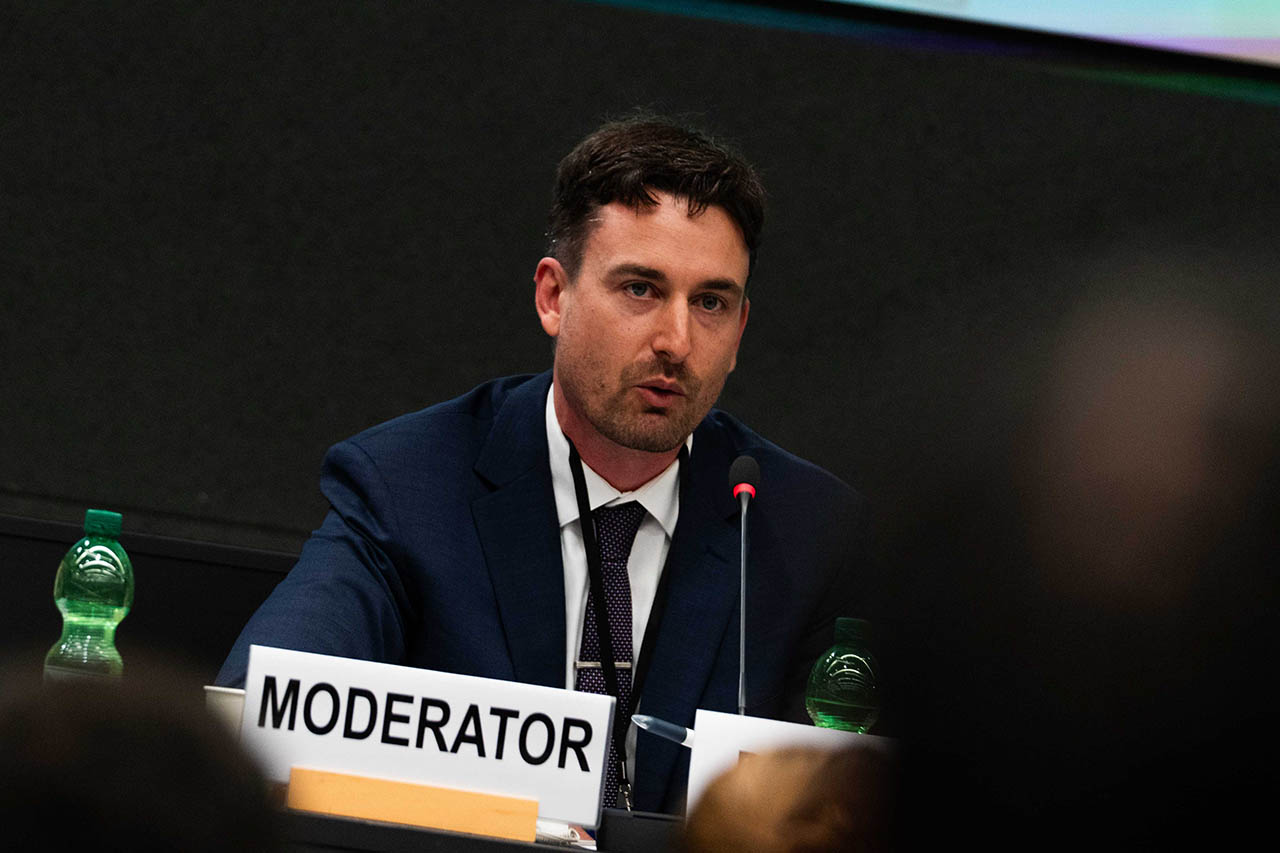
Daniel Hill is a Deputy Director at Natural Resources Canada, leading international engagements and multilateral affairs for the Canadian minerals sector, and serves as the Chair of the IGF Executive Committee.
A key part of his role is driving Canada’s engagement through major international forums, including the G7, G20, International Energy Agency, the Organisation for Economic Co-operation and Development, United Nations, and priority international organizations like the IGF.
Daniel was interviewed on the sidelines of the 22nd IGF Annual General Meeting in October 2026.
What does the critical minerals boom demand of governments, and how is the IGF helping them respond?
Rapidly rising demand for critical minerals creates an urgent need to pair increased production with strong ESG (environmental, social, and governance) standards and to ensure that growth translates into real economic benefits across the entire value chain.
For Canada, rising demand reinforces the importance of developing critical minerals responsibly, accelerating investment, and strengthening secure supply chains with trusted partners.
This context also means that technical assistance alone is no longer enough. Technical assistance is excellent at closing a specific gap, like reviewing a mining law, but today’s challenges, such as designing a national critical minerals strategy or negotiating partnerships that deliver local benefits, move faster, and cut across several policy areas. No government has all the answers, so they are looking for strategic policy advice, international partnerships, and the chance to learn from each other’s experience.
That is where the IGF comes in: at a time when many countries are asking themselves the same questions, the IGF helps governments share practical solutions that support responsible development and long-term prosperity.
What makes the partnership between Natural Resources Canada and the IGF work?
Our partnership with the IGF works because it’s built on long-term engagement and practical collaboration since day one back in 2005. It thrives because we are fundamentally aligned: we share a commitment to responsible, sustainable resource development, a clear understanding of the vital role minerals play in modern life, and the conviction that a trusted global forum is essential for tackling our sector’s priorities together.
One area where we’re closely aligned is multistakeholder participation. Mining activities involve and impact a wide range of stakeholders and communities, so collaboration across the board is essential to secure maximum benefits and uphold the highest standards. Canada’s experience demonstrates that strong Indigenous partnerships and early engagement help create better projects and more lasting benefits.
The IGF puts this principle into practice, and its annual general meeting (AGM) is a strong example. It brings governments together with industry, civil society, Indigenous Peoples, and international organizations to learn from one another. At this year’s meeting, a record number of participants registered, including 110 government delegates. These meetings are unique opportunities where a vice minister, a mining company, and an Indigenous Peoples’ organization can meet, share their perspectives, and discuss together on the same panel.
Another example is the IGF Mining Policy Framework, which provides practical guidance that governments can adapt to their national context, and we frequently see countries return for re-evaluation years later, proving the long-term value of these relationships. Beyond that, increased capacity building and technical expertise drive essential policy reforms, while published guidance and peer-learning opportunities let countries learn directly from each other’s experiences. Its country assessments also involve extensive consultations with government, civil society, and the private sector.
Canada is proud to support the mandate and mission of the IGF, including through core funding support provided in line with the inaugural Canadian Critical Minerals Strategy released in 2022, and the G7 Critical Minerals Action Plan released during Canada’s G7 Presidency in 2025.
What role will the IGF’s new Mining Academy play in building the skills mining policymakers need now?
Countries are looking at innovative ways to share knowledge. This is vital because many governments face serious, anticipated skills shortages that threaten global supply chains and deployment of clean technologies.
This is why I’m especially excited about the new Mining Academy that was launched during this 22nd AGM. The Mining Academy is building a global community of practice where policymakers and other stakeholders can learn from one another at scale.
This hub matters because the minerals space is getting quite crowded with an array of new initiatives, and the IGF provides a trusted, well-established home. It also helps all IGF members access resources to strengthen knowledge and capacities efficiently.
Ultimately, the Academy should leverage modern technologies and the array of global mining schools to support governments—both in Canada and abroad—across key technical and policy issues over the coming decade.
Why does the IGF matter?
The IGF matters because it helps members turn mineral wealth into lasting economic and social benefits through global collaboration, stronger governance, and a shared commitment to sustainable development.