

The challenge
The mining sector plays a large role in Zambia’s economy. The country was the eighth-largest producer of mined copper globally in 2024, representing approximately USD 7.5 billion, about 66% of Zambia’s total goods exports. The country also exports significant amounts of nickel and manganese, and according to the U.S. Geological Survey, the mining and quarrying sector contributed 17.4% of Zambia’s GDP in 2024.
Given the mining sector’s importance, the need for mine closure guidelines has become especially relevant. Mine closure guidelines are critical to ensuring environmental protection, public health, and safety and establishing sustainable post-mining land uses. Without legislation guiding licence holders on the approach to preparing mine closure plans, governments can face environmental liabilities and communities can face public health issues and the economic consequences of closure. The need for formal guidelines became especially important following environmental audits required for contributions to the Environmental Protection Fund.
“A robust and standardized framework for mine closure planning is essential to mitigate long-term liabilities, protect ecosystems, and foster trust between governments, mining companies, and local communities. While the law required closure plans to be prepared, no guidance existed on their format or how they should link to contributions to the Environmental Protection Fund,” said Mr. Jackson King Kafwanka, Assistant Director at Zambia’s Ministry of Mines and Minerals Development.
Our role
The ZAMNEX project is a bilateral initiative between the Zambian and Swedish governments implemented by the Swedish Environmental Protection Agency (SwEPA). ZAMNEX seeks to strengthen mining governance, environmental protection, and human rights in Zambia. As part of this project, the IGF provided technical expertise and international benchmarking to develop the guidelines.
A dedicated Task Force was then established under the Mines Safety Department, drawing members from government, mining licence holders, academia, and civil society organizations and supported by technical experts from the Geological Survey of Sweden and the IGF.
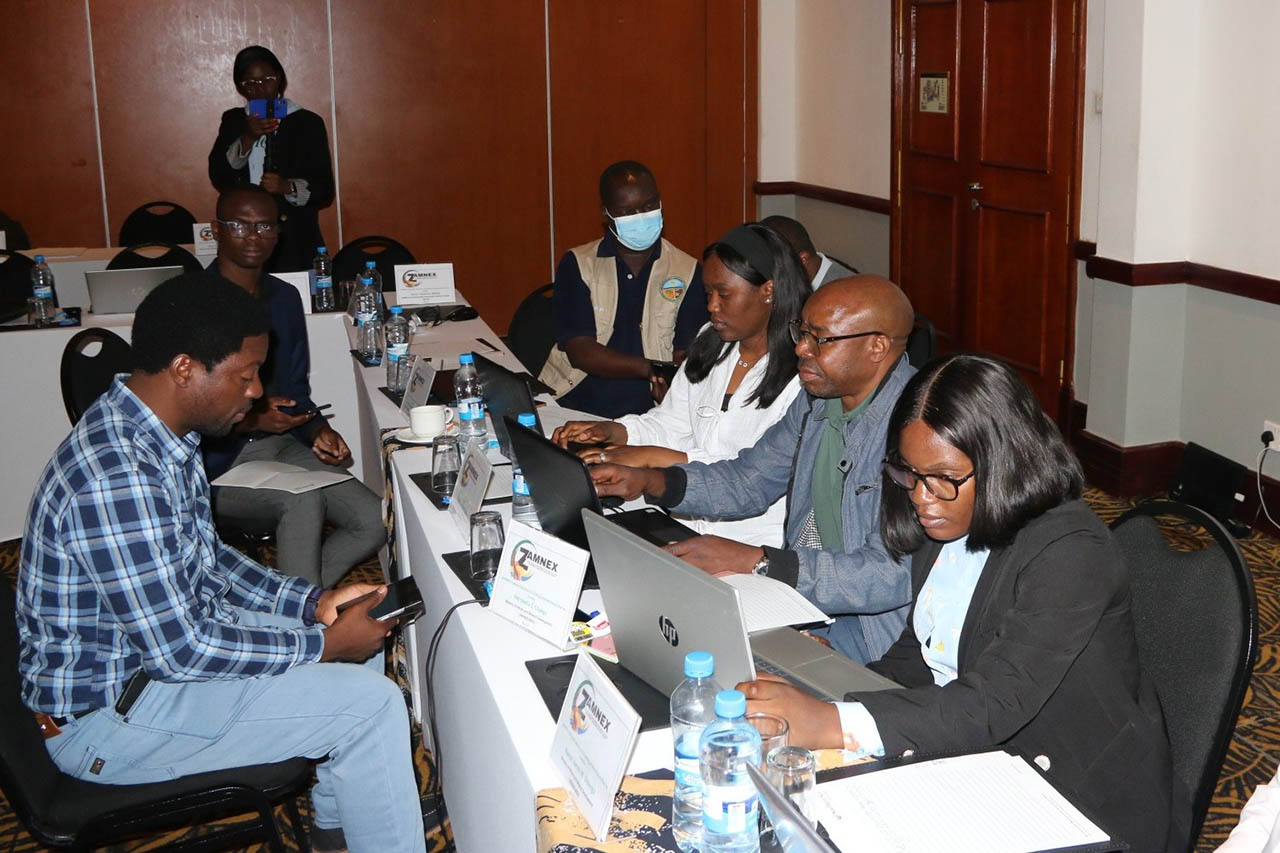
At a workshop organized by the Task Force, participants divided into groups to study mine closure guidelines from countries across Africa, including South Africa and Tanzania, and world-wide, including Australia, Canada, South America, Sweden, as well as from organizations such as the International Council on Mining and Metals, World Bank, Asia-Pacific Economic Cooperation, and IGF, including Financial Assurance Governance for the Post-Mining Transition and Relinquishment of Closed Mine Sites: Policy Steps for Governments. This benchmarking informed a first working draft, refined through successive rounds and incorporating expert reviews and stakeholder comments, before a final version was consolidated and presented at validation workshops, where consensus was reached.
“Bringing together government, mining license holders, academia, and civil society in a joint Task Force, supported by international benchmarking from the Geological Survey of Sweden and the IGF, gave us a set of guidelines tested against both local realities and international good practice,” said Jackson King Kafwanka.
Our impact
On July 24, 2026, the Ministry of Mines and Minerals Development, in partnership with the Minerals Regulation Commission, officially launched Zambia’s new guidelines for mine closure plans in the presence of Dr. Hapenga Kabeta, the Permanent Secretary of the Ministry of Mines and Minerals Development, Dr. Thomlinson K. Hara, Director General of the Minerals Regulation Commission; and Mr. Johan Hallenborg, Swedish Ambassador to Zambia.
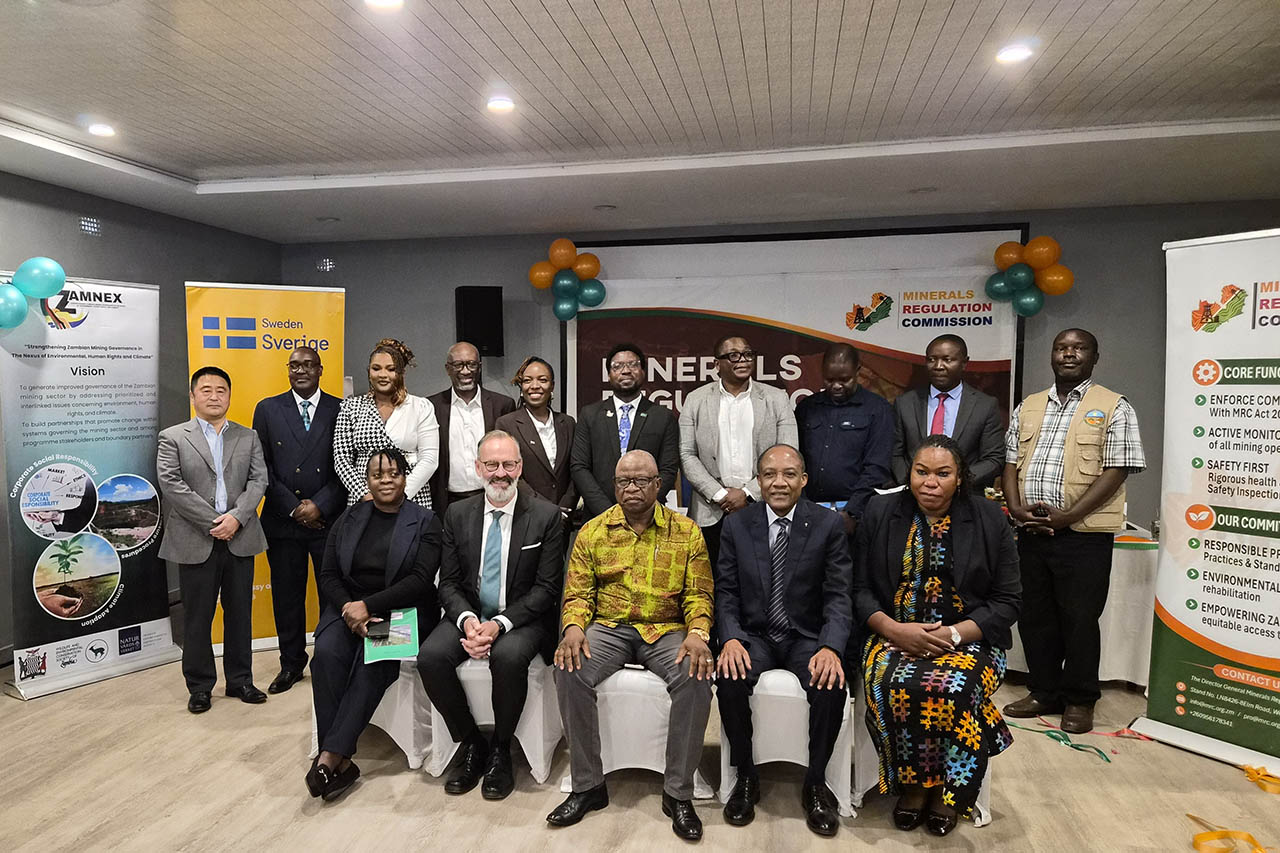
The new guidelines establish Zambia’s first comprehensive national framework for the preparation, implementation, review, and regulation of mine closure plans. Rather than treating closure as an afterthought, they position it as an integral part of mine planning from the outset, setting minimum requirements for physical, chemical, ecological, and social stability; progressive rehabilitation; stakeholder engagement; socio-economic transition; closure cost estimation and financial provisioning; and post-closure monitoring.
For the private sector, the guidelines bring a consistent approach to preparing closure plans from the start of a mine’s life, with clear links to Environmental Protection Fund requirements. For the government, they enable easier enforcement and better preparedness to manage any legacy issues that arise. For communities, they set out a clear approach to their involvement in closure planning and in the eventual closure of mining sites. Next steps include developing a training curriculum to build capacity among regulators, consultants, and licence holders, as well as government institutions, communities, and local and traditional leaders, in their roles in stakeholder engagement and post-mining land use.
“The Mine Closure Plan Guidelines represent an important milestone in the responsible development of Zambia’s mining sector, ensuring that the benefits of mining continue long after operations have ceased and that negative impacts are minimized. For the first time, they establish a common national approach to mine closure planning, encouraging government, regulators, and mining companies to integrate closure considerations from the earliest stages of a project,” said Andreas Lindström, senior advisor at SwEPA and Programme Manager for ZAMNEX.
This achievement reflects collaboration among government institutions, regulators, industry, academia, civil society, and cooperating partners around a shared vision for responsible mining. As Zambia’s mining sector continues to evolve, the guidelines strengthen the country’s ability to protect communities, the environment, and long-term land use for generations to come.