

The Challenge
Papua New Guinea (PNG) is home to rich mineral deposits, including gold, copper, nickel, cobalt, and silver. The country hosts several large-scale mining operations, including the Porgera, Lihir, Ok Tedi, and Wafi-Golpu mines. In 2024, the country’s mining sector contributed 29% of gross domestic product and 40% of total export earnings.
Since 2019, the Intergovernmental Forum on Mining, Minerals, Metals and Sustainable Development (IGF) and the International Institute for Sustainable Development (IISD), through the Global Mining Tax Initiative and in collaboration with the Organisation for Economic Co-operation and Development (OECD), have worked with the Government of Papua New Guinea to strengthen revenue collection in the mining sector. A focus of this collaboration has been supporting the introduction of a capital gains tax on profits from the sale of extractive assets, which took effect in January 2026.
The sale of extractive assets, such as mines or mining licences, can generate significant income. Many countries seek to capture this income through capital gains taxes. The challenge is that companies may route these transactions through offshore jurisdictions, putting the profits outside the mining country’s tax system. This practice, referred to as an offshore indirect transfer, makes it difficult for the country where the asset is located to collect taxes on the gain. Even where legislation is introduced to address these transfers, further challenges remain in collecting the full value of capital gains taxes: companies may misreport the value of an asset in a sale, or inflate their costs related to that asset to reduce reported profits.
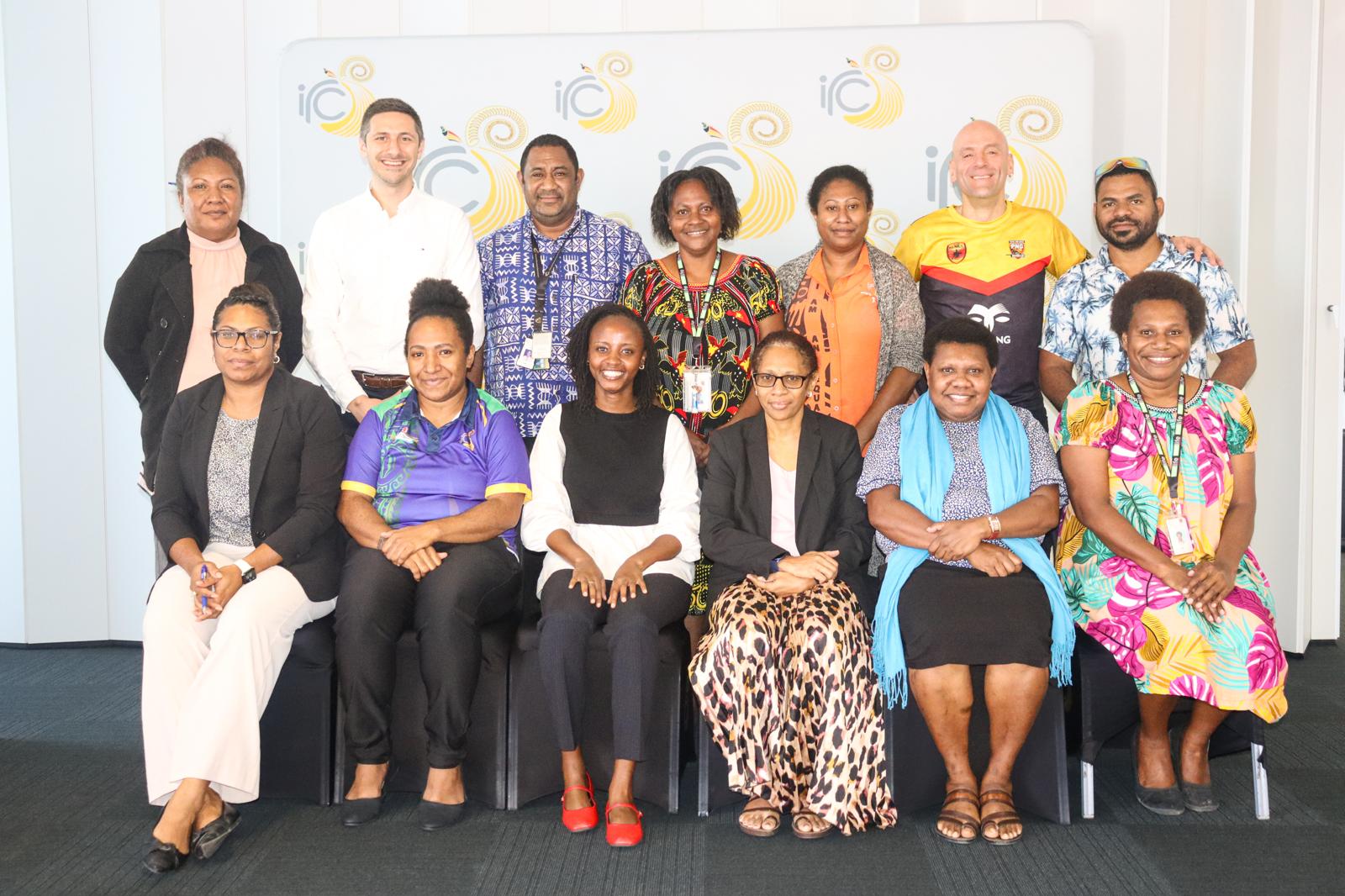
Participants and facilitators at a 2025 IGF-OECD workshop in Port Moresby, Papua New Guinea
In the absence of legislation addressing these transfers, as well as the capacity to implement and enforce such rules effectively, countries can miss out on substantial potential tax revenue, even though the profits from the sale come directly from extractive assets within their borders.
PNG has experienced several large transactions structured as offshore indirect transfers. In 2023, Newmont Corporation acquired Newcrest Mining Limited for approximately USD 17 billion, a deal that included significant assets located in PNG, such as the Lihir and Wafi-Golpu mines, valued at around USD 4 and USD 3 billion, respectively. Under a capital gains tax, transactions of this scale could have translated into significant public revenue.
A similar transaction occurred in 2021, when Santos Limited acquired Oil Search Limited, another company with substantial operating assets in PNG, in a deal valued at approximately USD 6 billion.
While these transactions are one-offs, they are likely to become more frequent given the growing pace of mergers and acquisitions in the extractives sector.
Our Role
In 2021, we brought together the Internal Revenue Commission, the Treasury, and the Mineral Resource Authority to review international practices for taxing the transfer of mining assets. Following this, the government requested further analysis to support its review of the Income Tax Act. The Global Mining Tax Initiative and the OECD, with other partners, provided technical input into the drafting of the capital gains tax regime, including on how to tax offshore transactions.

Tax Policy Advisor Viola Tarus presenting at a capacity-building training in Port Moresby
In 2024, we conducted training on valuing mining licences for capital gains tax purposes. Participants learned how exploration and producing licences are valued, how to interpret and question investor reports, and how to identify red flags that may signal undervaluation or tax avoidance. This training strengthened the capacity of PNG tax and resource officials to apply the new capital gains tax rules effectively.
A year later, we held a capacity-building session to address remaining interpretation and implementation issues before the law came into effect. The discussion focused on how the capital gains tax would be applied in practice, enforced, and communicated to taxpayers. It clarified filing and record-keeping requirements, enforcement tools, and safeguards to protect PNG’s taxing rights over extractive assets.
Our Impact
In early 2026, the Government of Papua New Guinea amended its Income Tax Act to introduce a capital gains tax and to tax offshore indirect transfers of resource rights. These are important additions to PNG’s tax framework to align its fiscal regime with other resource-rich countries and enable the country to benefit fully from the sale and transfer of interests in extractive assets located in PNG.
Since January 2026, PNG has applied a 15% capital gains tax to gains arising from the direct or indirect sale of interests in extractive assets located in the country. The tax applies not only to the sale of mining rights themselves, but also to information relating to operations under the resource right, as well as a membership interest in an entity if more than 50% of the value of the membership interest is derived—directly or indirectly—from PNG resources.
“IGF and OECD support has been instrumental throughout the process, and we are grateful to the experts for the ongoing support,” said Sam Loi, Acting Commissioner General.
At a time of increased investment and consolidation in the mining sector, these rules have the potential to generate tens of millions of U.S. dollars in additional public revenue that would otherwise escape taxation.
“By providing expert inputs from the early design of the rules through implementation and guidance on communicating the changes, they have played a key part in strengthening our ability to apply the capital gains tax in practice and ensure the new legislation protects revenue from major mining transactions,” continued Commissioner General Loi.
We continue to support PNG with guidance and the implementation of the new tax. This includes the development of a guidance note to help taxpayers understand their obligations and the preparation of a filing template for capital gains tax. This work is helping ensure the reform delivers results in practice by strengthening compliance and administrative readiness.