

The Challenge
In recent years, Ecuador has been expanding its mineral sector to diversify its economy. The country sits on significant mineral deposits of gold, silver, and copper, attracting foreign direct investment in both large and medium scale mining projects, with two major mines already under production.
Mining contributed USD 1 billion in taxes and royalties to the government in 2024. The sector could surpass shrimps as the country’s leading export, generating substantial tax revenues that could support domestic resource mobilization efforts to reduce poverty and inequality.
However, challenges remain in fully realizing these benefits, exposing Ecuador to significant revenue risks. These include:
- Transfer pricing manipulation, where companies sell minerals to related parties abroad (such as a parent, a sister, or subsidiary company) at below-market prices to reduce taxable profits. Although Ecuador has been updating its legal and regulatory framework for transfer pricing, tax auditors face challenges applying the current rules to the mining sector.
- Undervaluation of mineral exports, where companies underreport the quantity or quality of mineral exports to pay less in taxes and royalties. Since 2019, export monitoring regulations have aimed to verify the content and purity of minerals. However, weak certification standards and high tolerance for discrepancies make it difficult to ensure accurate valuation—undermining tax and royalty collection.
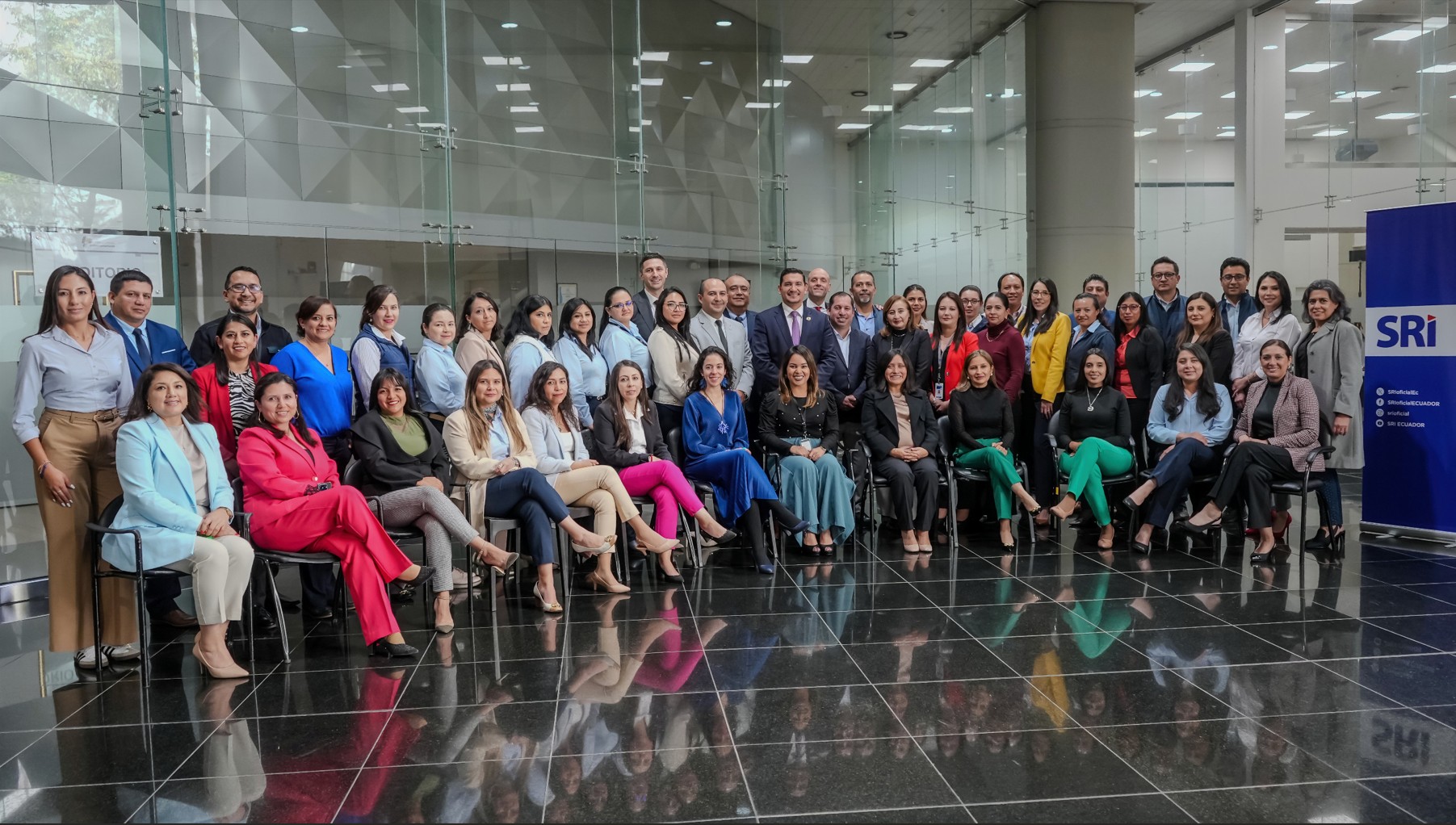
Participants and facilitators at a 2025 IGF-OECD workshop in Quito, Ecuador.
Our Role
Since 2022, the Intergovernmental Forum on Mining, Minerals, Metals and Sustainable Development (IGF) has been working closely with the Organisation for Economic Co-Operation and Development (OECD) to support the Internal Revenue Service of Ecuador (SRI, from its acronym in Spanish), the Ministry of Energy and Mines (MEM) and the Mining Regulation and Control Agency (ARCOM, from its acronym in Spanish) in addressing the gaps in the country’s mining taxation framework. This support is part of a deep dive program, a multi-year effort providing comprehensive and targeted support to the country.
Among other priorities, we supported officials in the tax authority and the ARCOM in the following areas:
1. Transfer pricing and tax audits
The IGF and the OECD supported the tax authority in strengthening and applying their transfer pricing rules for mining, including removing exemptions that allowed some companies to fall outside the system. We also helped introduce a new withholding regime that requires mining companies to pay part of their corporate income tax upfront based on reference prices, together with new regulatory obligations for mining taxpayers to report comprehensive, standardized data on their transactions, enabling tax authorities to identify pricing risks.
Between 2023 and 2024, we organized three dedicated workshops on addressing transfer pricing risks in the mining sector and provided technical capacity building assistance on a transfer pricing audit of a mining company in collaboration with the Tax Inspectors Without Borders initiative.
“Working with the IGF and the OECD was essential in strengthening tax oversight in the mining sector, enabling us to identify pricing risks and other tax planning schemes while reinforcing compliance as the sector grows.” said Alexandra Navarrete Ricaurte, General Director of the Internal Revenue Services.
2. Valuation of mineral exports
We worked closely with officials in Ecuador’s ARCOM, who coordinate and manage the systems to monitor the value of mineral exports, including the Minerals Exports Certificate (MEC). The MEC certifies that the minerals to be exported comply with applicable regulations and are correctly classified under the customs tariff.
As part of this work, we helped officials identify information gaps in what mining companies report to the MEC and to assess whether the permitted percentages of difference in the ore grade reflected in the laboratory sample and the Mineral Productions Certificate (MPC) were in line with industry standards. In 2023, we organized a dedicated training on copper and gold concentrates pricing and helped regulators to develop stronger rules to better monitor the value of mineral exports building on our practice note.
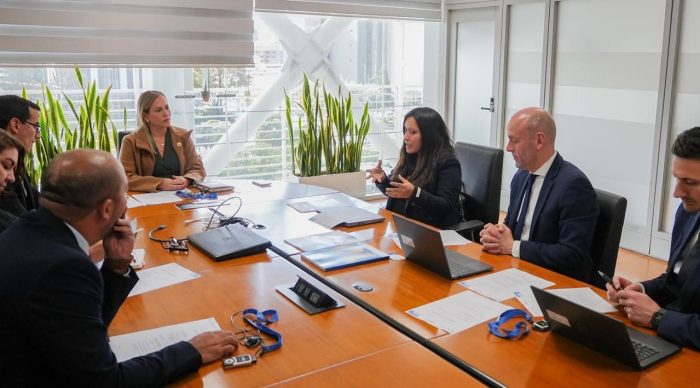
Jaqueline Taquiri (IGF), Diego Gonzalez (OECD) and Andrew Viola (OECD) are meeting with officials from the Government of Ecuador.
Our Impact
1. Transfer pricing and tax audit support
Targeted technical support has enabled Ecuador to strengthen mining taxation, secure significant revenues, and reduce compliance risks, laying the foundation for sustained fiscal gains from the sector. Under our technical assistance:
- Ecuador reformed its Income Tax Law, eliminating ambiguous exemptions from transfer pricing rules that had shielded certain mining companies. Three medium-scale mining operations are now fully subject to Ecuador’s transfer pricing framework, bringing related-party transactions valued at approximately USD 6.3 million under regulatory oversight and enhancing the tax authority’s ability to monitor and challenge arrangements that shift profits out of the country.
- The SRI introduced a robust withholding regime for the mining sector. As a result, between August 2024 and 2025, Ecuador mobilised USD 19.7 million in advance tax revenues, providing the government with immediate fiscal space and reducing compliance and underpayment risks.
- Ecuador’s SRI significantly strengthened transfer pricing audit capacity in the gold and copper mining sectors, translating directly into increased tax assessments. One audit has already resulted in an additional USD 1.7 million in assessed tax liabilities, and several others are currently underway.
- The SRI introduced new regulatory requirements obliging mining companies to submit detailed and standardized data on transactions, including production and export volumes. It is estimated that 4,947 taxpayers will be subject to these reporting obligations. This reform significantly strengthened the SRI’s information base, giving the tax authority timely and granular data to enhance risk assessment, audit targeting, continuous compliance monitoring, and long-term safeguarding of mining revenue.
2. Valuation of mineral exports
Ecuador updated its legal framework to strengthen the monitoring of mineral export values through the Reglamento para el Control de Exportación de Minerales, Resolution No. ARCOM-004/25.
One of the key amendments revises the permitted differences between ore grades measured in laboratory samples and the values reported in the Minerals Export Certificate for copper, gold, silver, and other mineral concentrates and final products, to better align with industry practice.
For instance, the new rules reduce the allowable underreporting of metal content in copper concentrates and gold doré from 3% to 1%. This stricter approach can lead to increase revenue from abusive taxpayers via appropriately reporting the metal content. Assuming that companies under-declare copper and gold content to the maximum extent allowed, this could represent up to 2% in increased mineral export value – and associated taxes.
Applied to Ecuador’s main operating mines, Fruta del Norte and Mirador, this represents USD 40 million per year (2% of the projected USD 2 billion in annual mining export value over the next decade) of copper, gold and silver that could previously have fallen within the margin of error under the old rules. Under the two mines’ fiscal regimes, USD 40 million in additional annual income translates into USD 14.5 million in additional government revenue through royalties, labor share and income tax each year.
Another important amendment included a revised list of information that mining companies must submit to obtain a MEC, giving authorities more tools to detect manipulation of export values.
Conclusion
The updated legal and policy frameworks, along with improved mining audit practices, should enable Ecuador to collect greater revenues from mining and provide investors with a more predictable tax system. These reforms have already generated several millions of dollars in additional revenue, and further gains are expected through increased compliance and more efficient audit process.
The IGF and the OECD continue to work closely with the Government of Ecuador, supporting tax audits of mining sector taxpayers and helping strengthen the fiscal regime that applies to mining.