
The mining sector plays a vital role in the economic growth of many African countries. However, when engaging in contract negotiations with investors, these states often operate within institutional environments that face capacity constraints and governance challenges. Information asymmetries, imbalances of power, and the increasing complexity of the financial, legal, and technical models of mining projects are among the factorsoften limiting their ability to obtain fair and sustainable terms.
In this context, strengthening the capacity of African states to negotiate mining contracts that are fair, transparent and aligned with sustainable development goals is becoming a strategic priority. Well-prepared and balanced negotiations not only maximise economic, fiscal and social benefits, but also ensure responsible resource management, help cultivate environmental stewardship, reduce the risk of international disputes and foster a sustainable partnership between the state, the investor and communities.
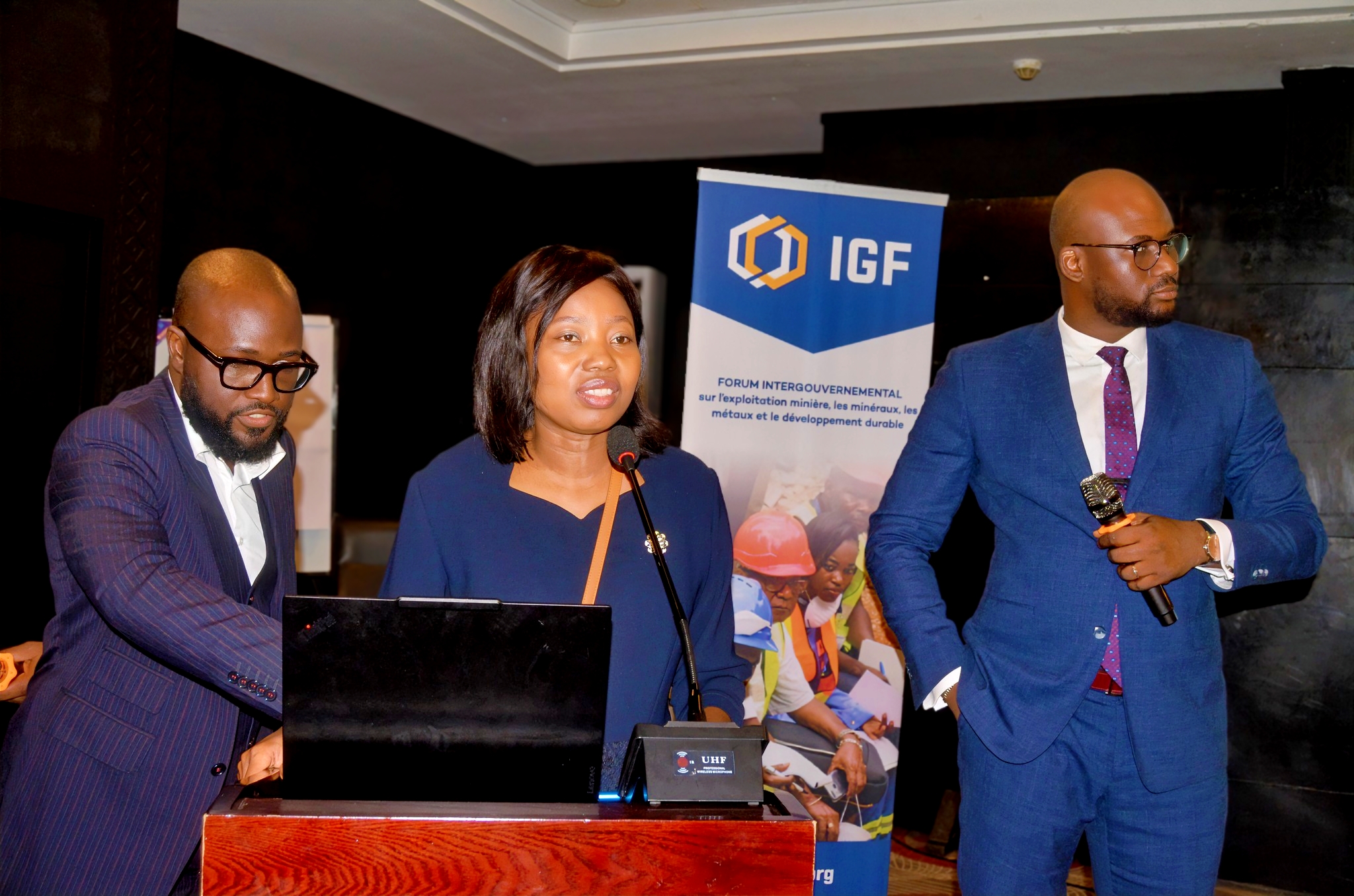
In collaboration with the Ministry of Mining Industries and Geology of the Republic of Congo, and the African Legal Facility Support (ALSF), the IGF convened a four-day regional training workshop on mining contract negotiation in Brazzaville, Republic of the Congo, bringing together more than 50 participants from across Central and Eastern Africa. The workshop was designed to strengthen government capacity to negotiate and implement mining agreements that deliver durable economic, social and environmental benefits while advancing national and regional sustainable development priorities.
The training was officially opened by the Minister of State for Mining Industries and Geology, Mr. Pierre Oba, in the presence of officials from various Congolese ministerial agencies, invited partners including UNDP and EITI-Congo, and delegates from Congo, Burundi, Cameroon, Gabon, and Chad. Discussions highlighted common challenges and identified concrete measures to improve understanding of mining contract types, strengthen states’ negotiation capacity, and safeguard the public interest. The topics covered included analysing the legal and contractual landscape, gathering critical project information, and assessing key elements such as investor profiles, financing arrangements, market conditions, infrastructure and energy requirements, and social and environmental risks. Participants also strengthened their skills in analysing and evaluating financial models used in mining projects to support informed decision-making.
The workshop focused on methods for building strong negotiation teams and setting up coordinated frameworks with clear roles, timelines, and expert support. It introduced practical methods for conducting balanced and transparent negotiations using an interdisciplinary approach. Participants also learned to apply economic and financial analysis to evaluate proposals, clarify priorities, and manage behavioural and psychological dynamics during negotiations. Discussions highlighted the importance of aligning mining contracts with broader sustainable development objectives and structuring agreements to maximise fiscal revenues alongside social development and environmental protection.
Participants explored how to translate these principles into contract provisions that promote local processing, local content and decent job creation, ensuring that mining projects contribute more directly to national and regional value addition. The training also focused on understanding clauses on environmental protection including mining closure, responsibilities, its liabilities, and human rights and social responsibility, so that contracts support stronger safeguards for communities and ecosystems.
Beyond technical skills, the event served as a platform to strengthen cooperation and the exchange of experience among the countries represented. Officials shared insights on recent legislative reforms, practical successes and difficulties encountered in negotiations. They also identified opportunities to foster intergovernmental dialogue on common challenges in Central and Eastern Africa, including through the creation of a regional network of experts in mining contract negotiation.